01
Transport first
School runs, groceries and station connections are normal bike trips — not only weekend sport.
Germany
Germany is not only a place with bike lanes. It is a layered system of everyday utility riding, long-distance routes and a structured amateur sport culture — especially visible around Berlin and Brandenburg.
School runs, groceries and station connections are normal bike trips — not only weekend sport.
Vereine organise licences, juniors and local races. Amateur calendars remain dense through summer.
Signage, lights and path types reinforce each other. Visitors notice the calm — then the details.
In many German towns, the bicycle is treated as a default short-trip vehicle. Protected lanes, traffic lights timed for riders and dense parking at stations make that possible. The result is not only “sport cycling” — it is school runs, grocery trips and last-mile connections to regional trains.
Around Hoppegarten and eastern Berlin, riders mix dedicated Radwege with quieter residential streets. Surfaces vary; that is why gravel and robust city bikes are so common here.
Working lights, a bell and predictable lane behaviour are not optional extras — they are the baseline expectation. Our guides on German bike lanes and helmet norms and safety cover the practical details.

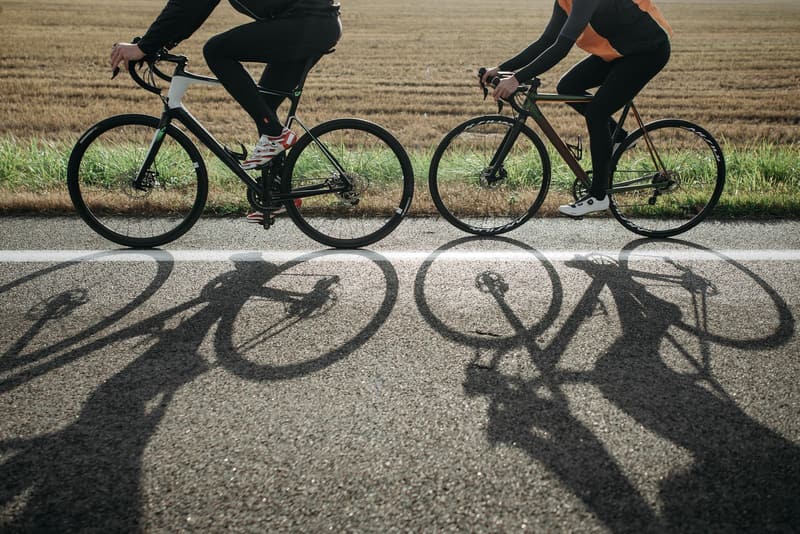
German cycling sport grew through local Vereine — clubs that organise training, juniors and weekend races. Amateur calendars still matter: criteriums, time trials and gran fondo-style events fill spring and summer weekends.
Track and road traditions sit alongside a rising gravel scene and established MTB communities. Youth coaching and regional federations give the sport a structure that goes beyond social media group rides.
For a closer look, read our piece on German race culture.
German cycling feels distinct because rules and design reinforce each other:
Visitors often notice how calmly riders share space — until they miss a “Radfahrer absteigen” sign or ride against a one-way bike street. Local norms reward attention.
Three path types matter in practice: a compulsory Radweg marked with the blue bicycle sign, an advisory Schutzstreifen with a broken line, and a mandatory Radfahrstreifen with a solid line. Getting that distinction wrong is the most common visitor mistake.

East of Berlin, the landscape opens into forests, lakes and flat-to-rolling roads. Hoppegarten sits in that corridor: close enough for urban access, open enough for long weekend loops. Family routes, MTB pockets and commute corridors all coexist within a short radius.
Wind, not gradient, sets the pace on open Brandenburg roads. Sandy forest paths punish narrow tires. Regional trains make one-way rides practical — ride out, take the train home. Those three facts explain more local bike choices than any brochure.
Start with family routes in Brandenburg, MTB trails near Berlin, or e-bike commuting depending on how you ride.
Cycling sport in Germany is developed in three senses: participation volume, club organisation and public acceptance of the bicycle as transport. Challenges remain — rural gaps, junction safety and freight conflict in dense centres — but the baseline is high compared with many countries.
Continue with our bike type guide or the full journal.
It is extensive and still expanding. Cities maintain dense networks of separated paths and marked lanes, long-distance Radwege are signposted and numbered across the country, and station areas provide large-scale bicycle parking. Quality varies by municipality, and junction redesign is the main area of ongoing investment.
Only where the path carries the round blue bicycle sign, which makes its use compulsory. An unsigned path beside the road is optional, so you may legally ride on the carriageway instead — often the better choice when the path surface is poor.
Two independent brakes, a bell, working front and rear lights, and a defined set of reflectors including on wheels and pedals. Riding without lights in darkness is the most commonly penalised cycling offence, which is why hub dynamo lighting is the local norm.
Through the Verein — the registered local club. Clubs handle licences, insurance, junior coaching and training rides, and they supply the volunteers who stage local events. Regional associations under the national federation coordinate the race calendar, from criteriums and time trials to cyclocross in winter.
Yes, particularly for long flat routes, lake loops and family rides. The terrain is glacial and largely flat, forests are extensive, and regional trains from Berlin make point-to-point rides easy. The main caveats are sandy unpaved paths and exposed roads where wind, not gradient, sets the pace.
Regional trains, S-Bahn services and many trams carry bicycles in marked areas, normally with a separate bike ticket and easiest outside peak hours. Long-distance services often require a reservation for a bike space, and folding bikes count as luggage.