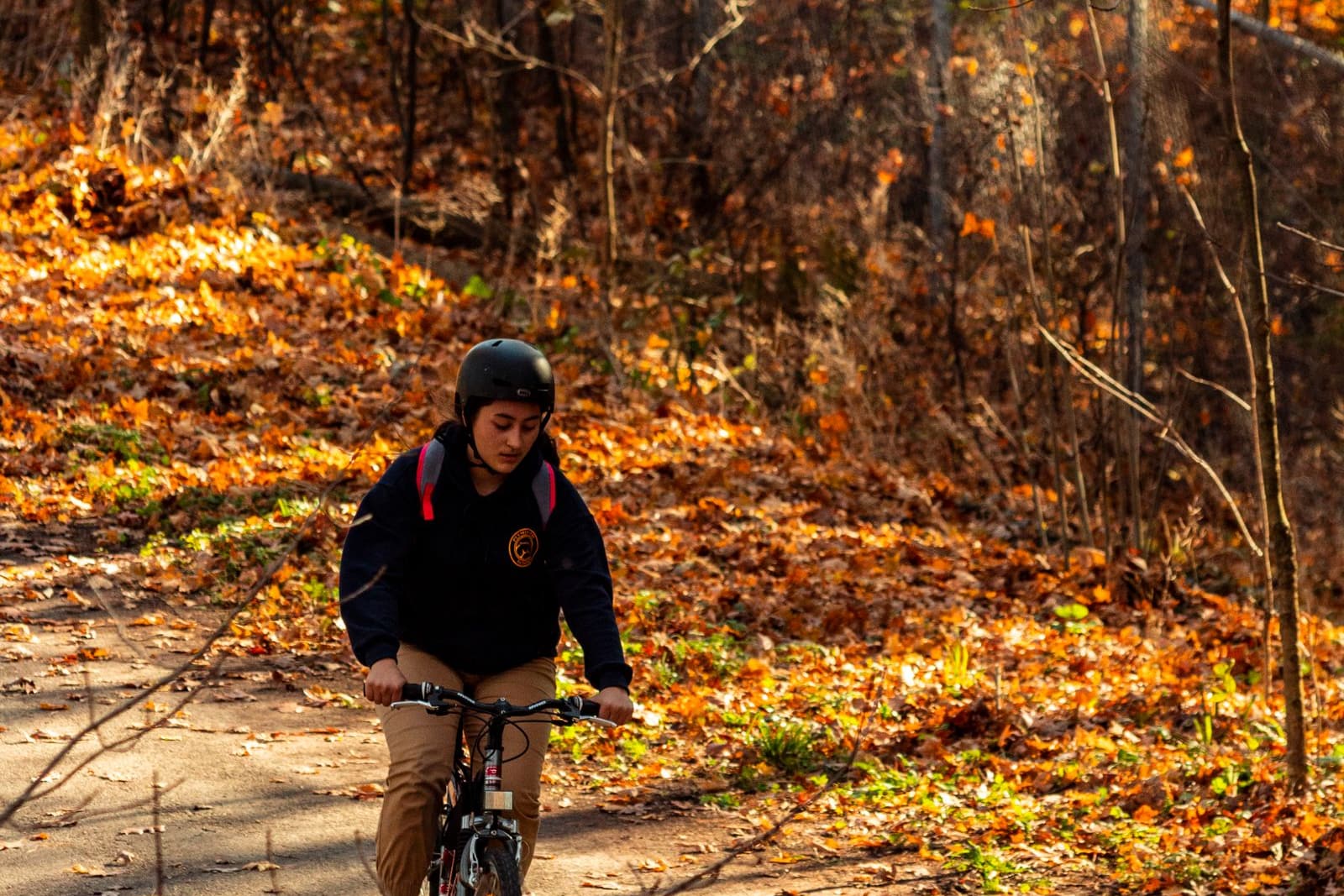
Mountain bike trails near Berlin & Hoppegarten
From the Klenzegen journal in Hoppegarten — written for riders who want clear, usable detail.
Berlin sits in a landscape shaped by glaciers, which is a polite way of saying it is flat. Riders who move here from mountain regions often conclude there is no mountain biking within reach. That conclusion is wrong, but it needs adjusting: the riding around Berlin and Hoppegarten is about sandy singletrack, short punchy climbs and technical roots rather than sustained descents.
Here is what the terrain actually offers, how to set a bike up for it, and how to ride it without ending up in conflict with forestry rules or walkers.
What the terrain is really like
Three characteristics define riding in the Berlin-Brandenburg area. First, sand — glacial deposits mean that many forest paths turn loose and draining in dry weather. Second, roots, because pine plantations produce shallow root networks that cross the trail constantly. Third, short elevation: gains come in bursts of twenty to sixty metres, so a good ride stacks repeats rather than chasing one long climb.
That combination rewards a different skill set than alpine riding. Line choice through sand, weight distribution over roots and the ability to carry speed through flat corners matter more than descending confidence.
Areas worth knowing
Rather than listing individual trails that change with forestry work, it helps to know which areas hold rideable terrain and what each is good for.
- Grunewald (west Berlin) — the largest forest inside the city, with rolling paths and the Teufelsberg rubble hill for repeated short climbs. Busy with walkers at weekends.
- Müggelberge and the Köpenick forests (south-east) — the closest thing to sustained gradient inside the city limits, with lakeside paths and genuinely technical sections.
- Märkische Schweiz (east of Hoppegarten) — a small hilly nature park roughly an hour out, with the most varied terrain in easy reach and proper valley descents.
- Barnim and the forests north-east — long, quiet forest tracks better suited to endurance rides and gravel-style loops.
- Bike parks in the wider region — for lift-served descending you leave Brandenburg, but a day trip to a park in the Harz or Saxony is feasible from Berlin.
From Hoppegarten specifically, the eastern forests and the Märkische Schweiz are the practical targets. Regional trains carry bikes and turn a one-way ride into a loop, which is how most local riders extend their range without a car.

Bike setup for sand and roots
You do not need a long-travel enduro bike here, and it would be the wrong tool. A hardtail or a short-travel trail bike suits the terrain far better: less weight to accelerate out of flat corners, and enough compliance for root sections.
| Setting | Local recommendation | Why |
|---|---|---|
| Travel | 100–130 mm | Matches short, rooty terrain without pedalling penalty |
| Tire width | 2.3–2.5 in | Volume floats over sand instead of cutting into it |
| Pressure | Lower than road habit suggests | Grip on roots and sand comes from the contact patch |
| Tread | Open, well-spaced knobs | Sheds sand and wet leaf litter |
Wide tires at moderate pressure are the single biggest improvement most newcomers can make. Riders arriving with 2.1 inch cross-country tires pumped hard spend the first month convinced the sand is unrideable. If you are unsure which category of bike fits your riding overall, our bike types guide compares them, and the geometry chart guide explains the numbers behind handling.
Riding sand well
Sand punishes hesitation. The instinct is to slow down and steer; both make it worse. What works instead: keep the pedals turning at a steady cadence, shift weight slightly rearward to unload the front wheel, keep your grip relaxed so the front tire can wander without pulling the bars, and look further ahead than feels natural. Choose the firmest visible line — usually where previous tires have compacted the surface, or the darker damp strip at the edge.
In sand, momentum is traction. Braking is the thing that puts you on the ground.
Rules, access and etiquette
Forest access in Germany is generally open for cycling on paths, but the details are set by state law and by local nature-protection designations, and they are enforced. Practical guidance for the Berlin area:
- Ride established paths. Building or cutting new lines in public forest is not tolerated and damages the case for legal trails.
- Yield to walkers, horses and runners without being asked. Slow early, pass wide, say hello.
- Respect signed protected areas and closures, including seasonal ones during forestry work or wildlife protection periods.
- Stay off soft, waterlogged trails. Ruts cut in wet conditions persist for months.
- Take litter out, including punctured tubes and energy wrappers.
Weekend mornings in Grunewald and the Müggelberge are busy with families on foot. Riding those areas early or choosing quieter forests at peak times does more for the sport's reputation than any argument about trail rights.
Practical planning from Hoppegarten
A repeatable pattern for local riders: ride out through the eastern forests, take a regional train back from a station further out, and keep the total under three hours. Carry more water than the distance suggests, because shade cover in pine plantations does little to cool you in summer. Phone reception is generally reliable but downloaded offline maps are worth having, since forestry roads look identical and junctions are unsigned.
Autumn is arguably the best season. Sand firms up with moisture, temperatures drop, and the leaf cover hides just enough of the roots to keep it interesting. Winter riding works too, with the caveats covered in our winter cycling post.
Frequently asked questions
Is there real mountain biking near Berlin?
Yes, though it is technical rather than steep. Grunewald, the Müggelberge and the Köpenick forests hold rideable singletrack inside the city, and the Märkische Schweiz nature park east of Hoppegarten offers the most varied terrain within about an hour.
What kind of mountain bike suits Brandenburg trails?
A hardtail or short-travel trail bike with roughly 100 to 130 mm of travel is ideal. The terrain is sandy and rooty with short climbs rather than long descents, so a long-travel enduro bike adds weight without adding capability.
Am I allowed to ride in German forests?
Cycling on established forest paths is generally permitted, but the specifics come from state law and local nature-protection rules, which are enforced. Stay on existing paths, respect signed closures and protected areas, and never cut new lines.
How do I ride through deep sand?
Keep a steady cadence, shift your weight slightly back to unload the front wheel, relax your grip so the front tire can move without steering you, and look well ahead. Braking or hesitating is what causes most crashes; wider tires at lower pressure help considerably.
Can I take a mountain bike on Berlin trains to reach trails?
Yes. S-Bahn and regional services have bicycle carriages and require a separate bike ticket, which makes point-to-point rides practical — ride out through the forests and take the train back from a station further along the line.